Open content and data infrastructure for self-hosted teams.
Use CairnCMS to model data, manage content, expose APIs, & automate workflows from one workspace built on SQL tables you control.
What Teams Can Do with CairnCMS
CairnCMS brings data modeling, content operations, permissions, automation, dashboards, and file management into one no-code admin without moving your data into a proprietary layer.
A no-code studio for shaping and managing your data.
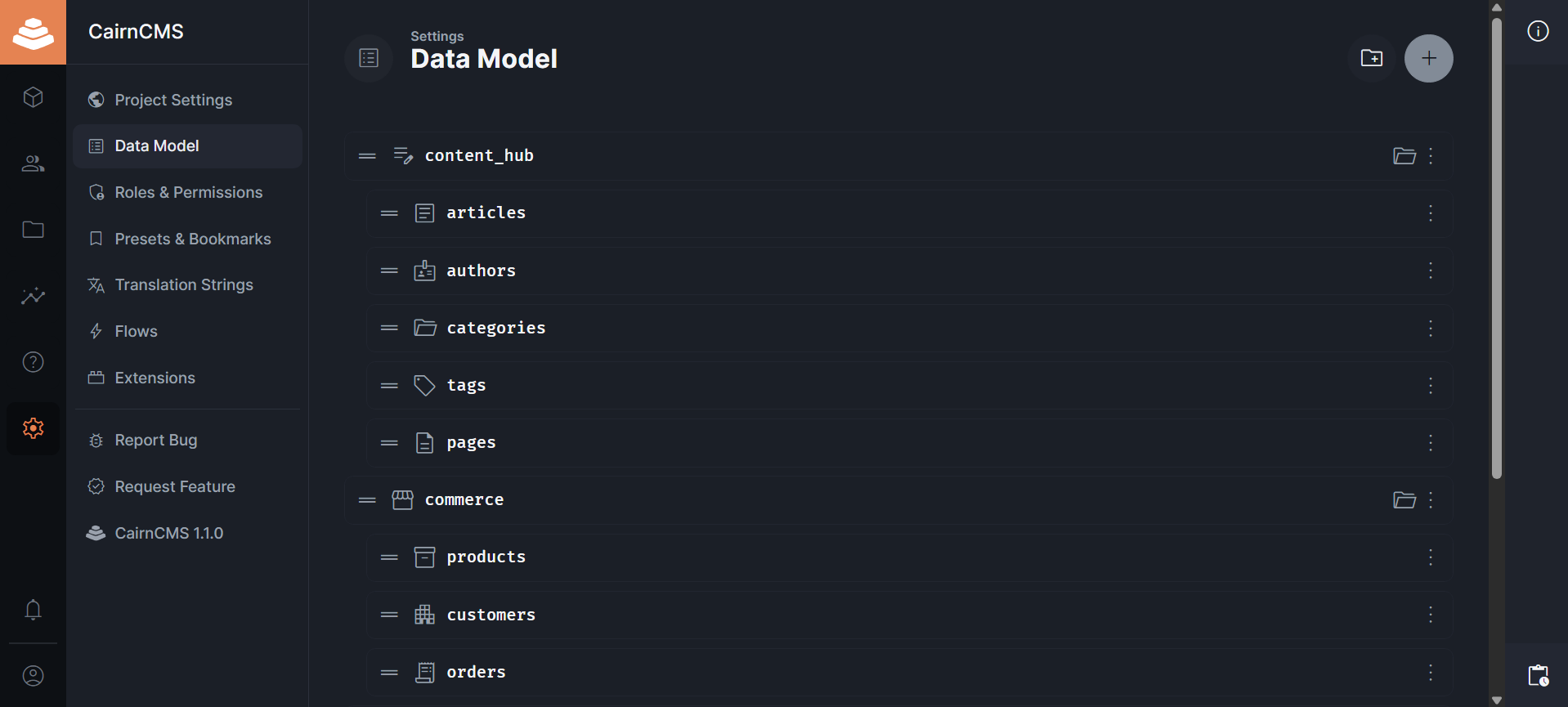
Bring an existing schema or build one from scratch in the CairnCMS studio. Define collections, fields, and relationships through the UI, or point CairnCMS at an existing database and let it reflect the schema that is already there. Either way, your data lives in standard SQL tables you fully control.
Explore data modeling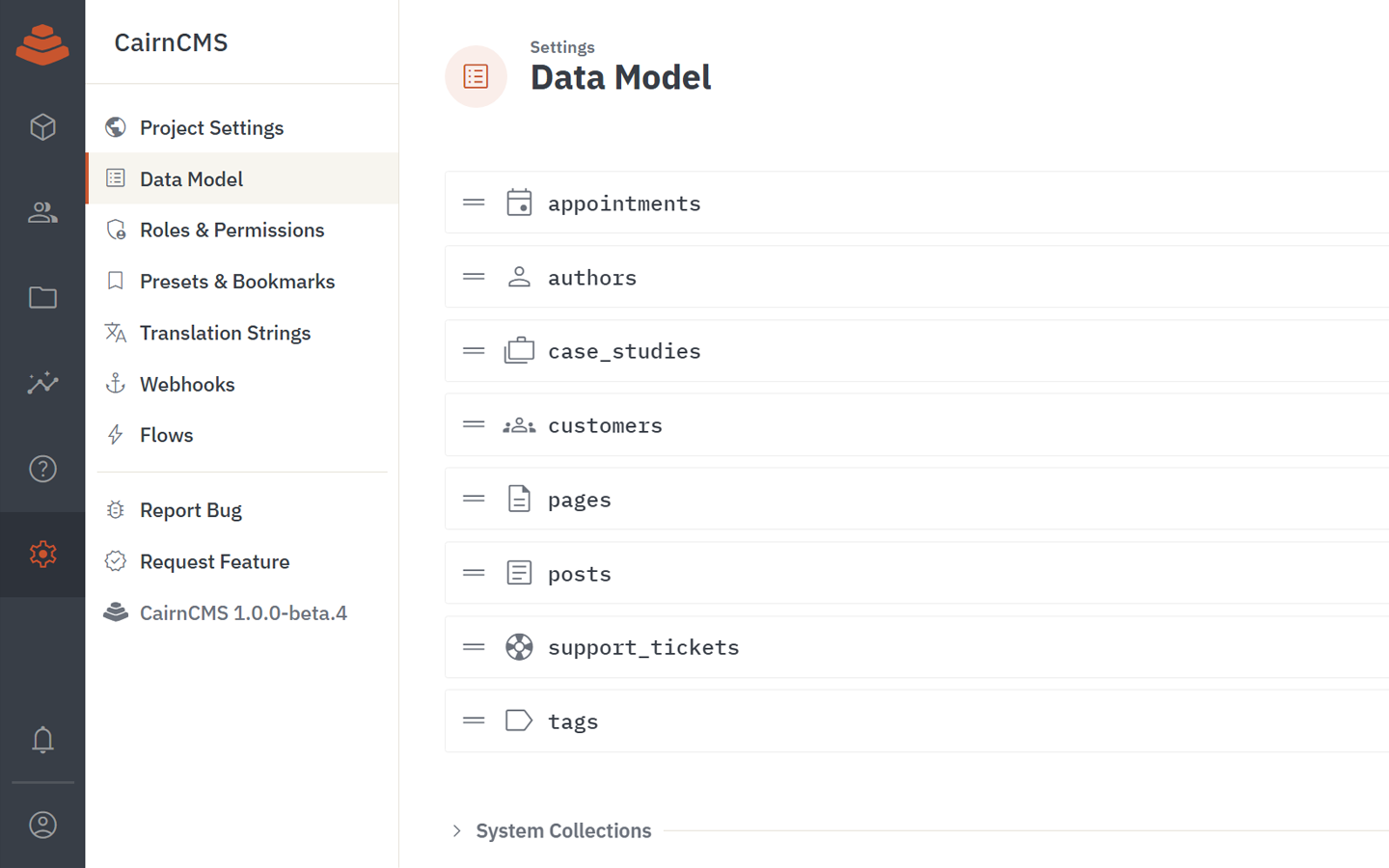
A content workspace built for every role.
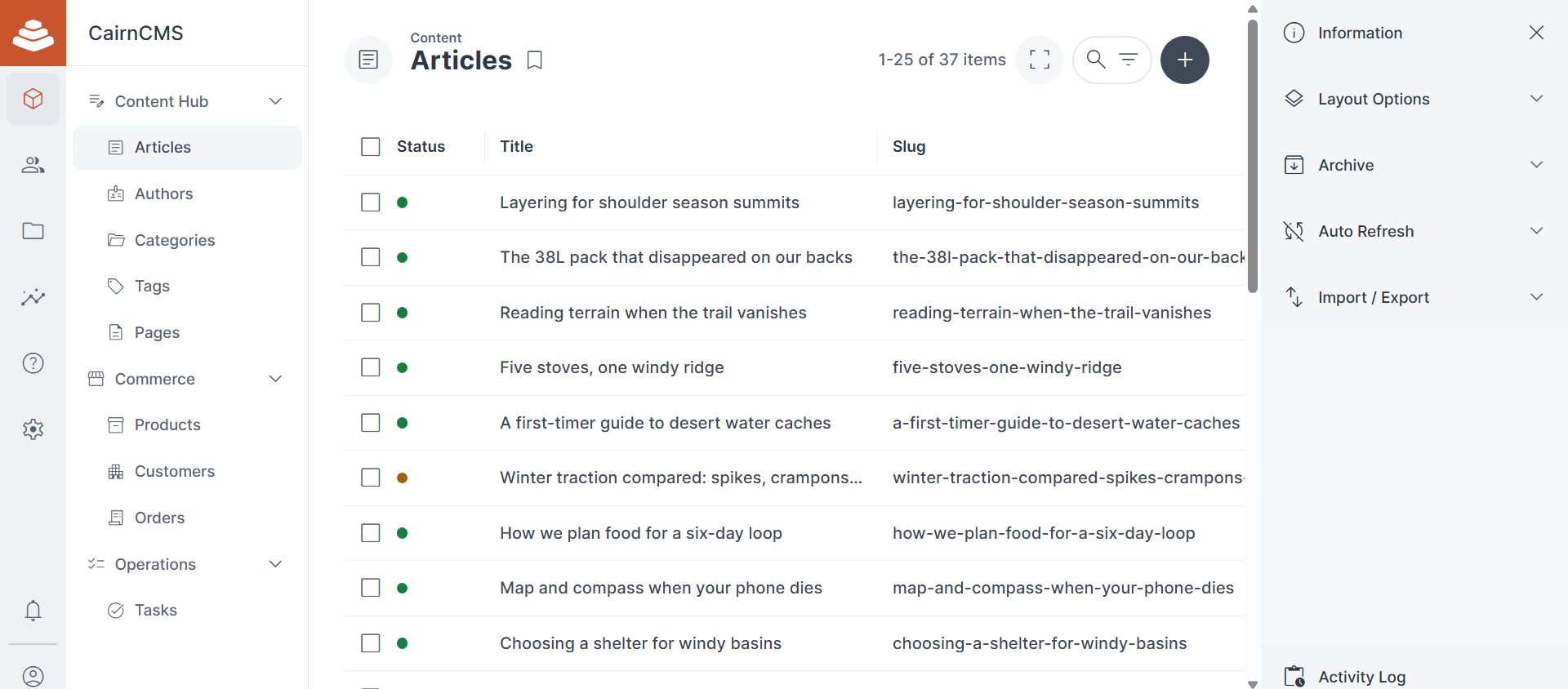
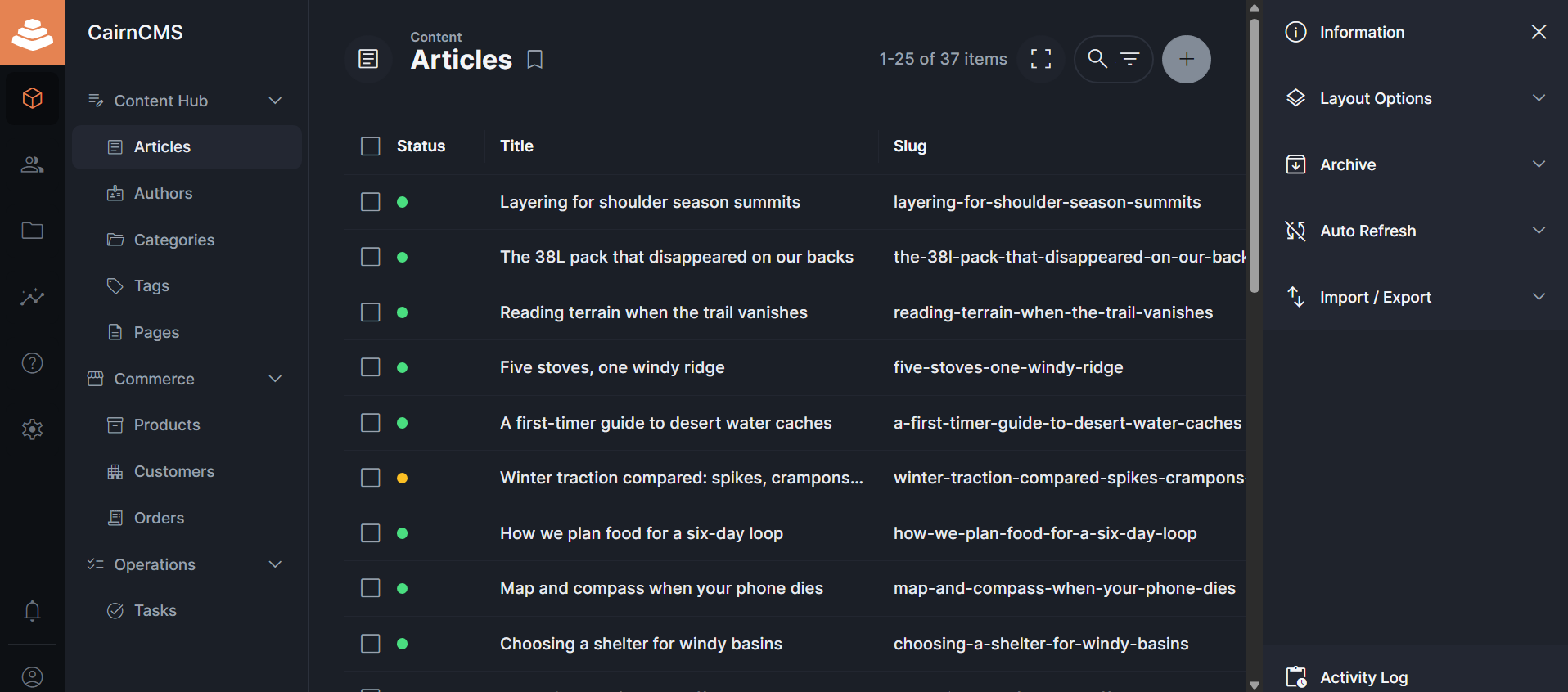
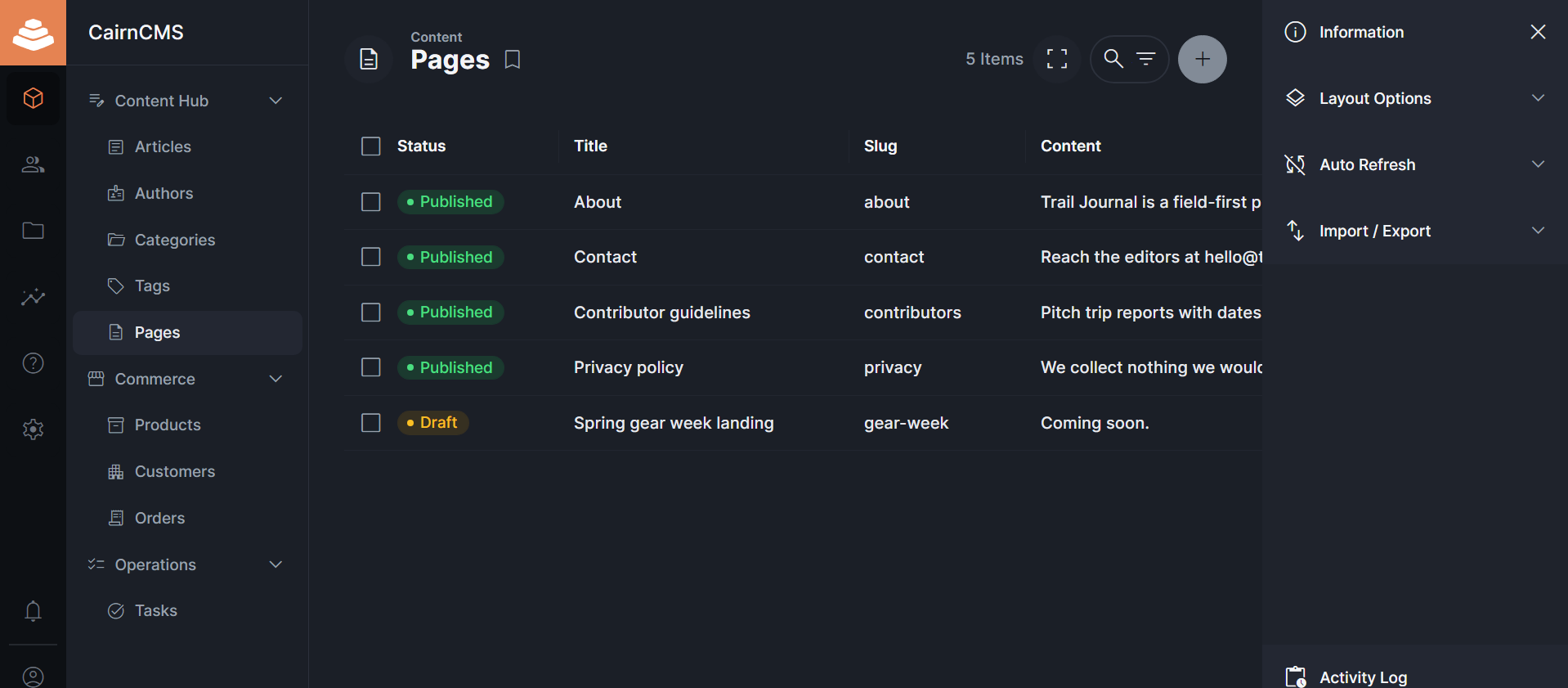
Give teams an interface matched to the work they need to do. Collections, fields, and actions are scoped by permissions, so editors and other users can create and manage records, comment and @mention teammates, review revision history, and generate share links without being exposed to the underlying schema.
Tour the workspace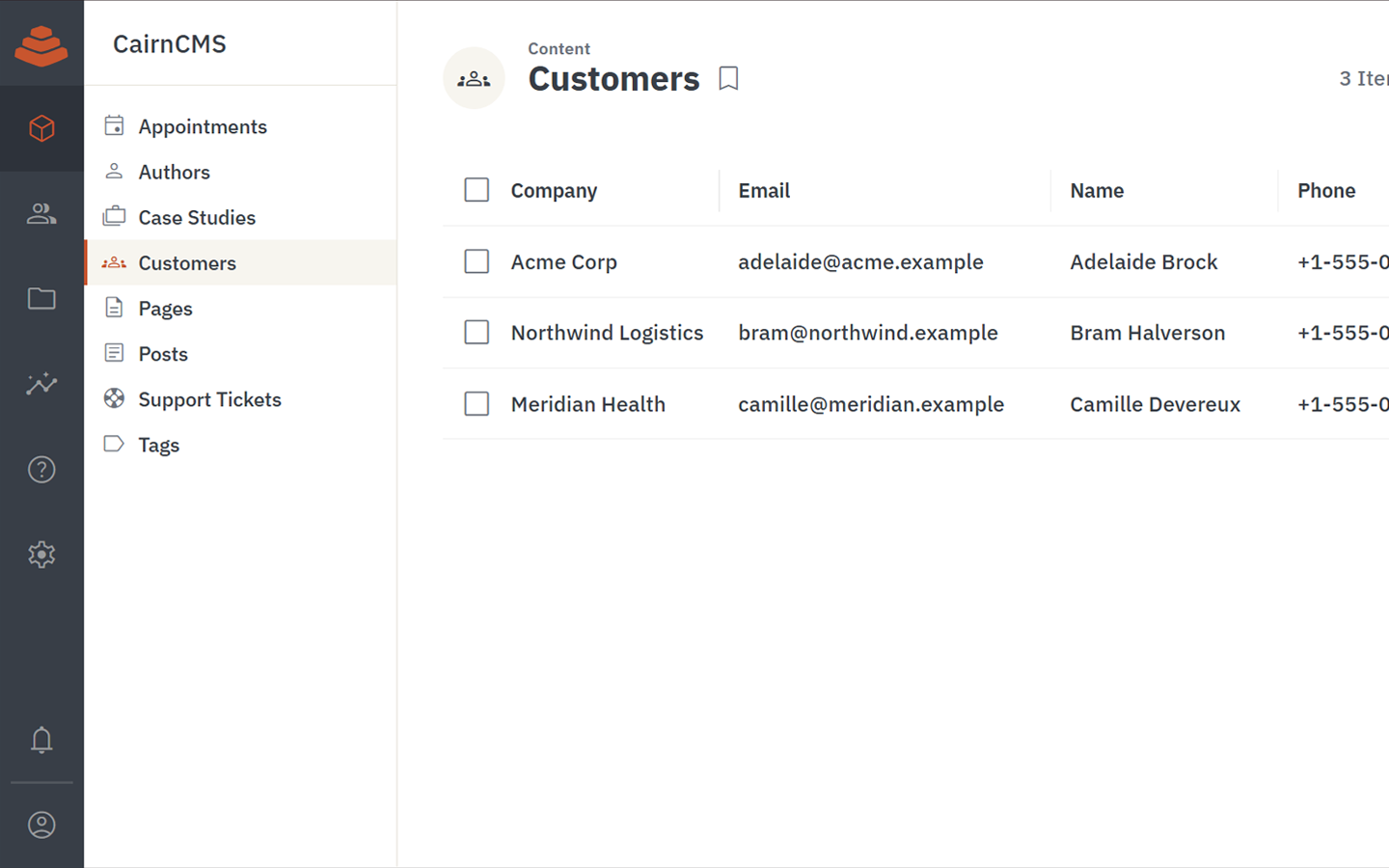
Granular permissions and access control.
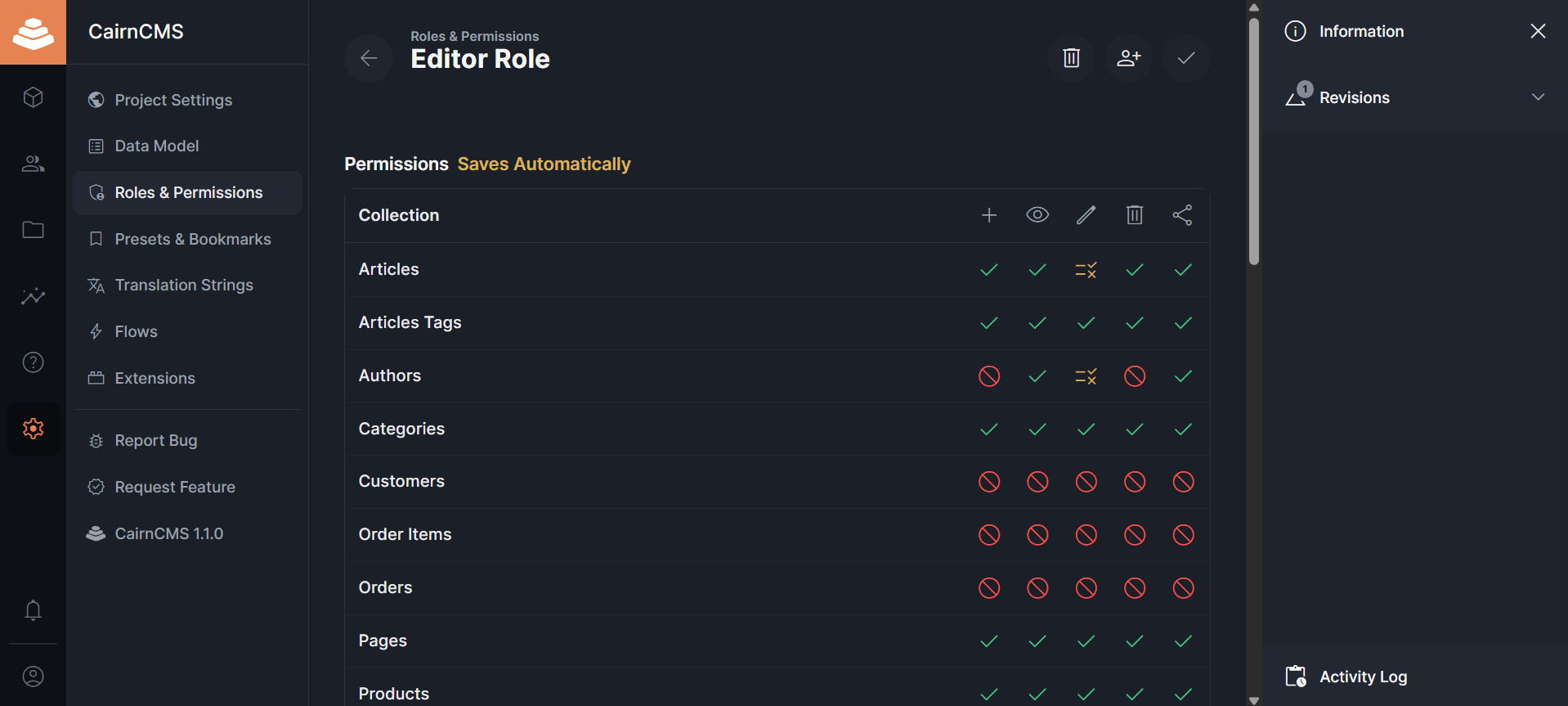
Define unlimited custom roles with field-level permissions, conditional access rules, separate app and admin access controls, IP allowlists, and enforced two-factor authentication where needed.
Configure permissions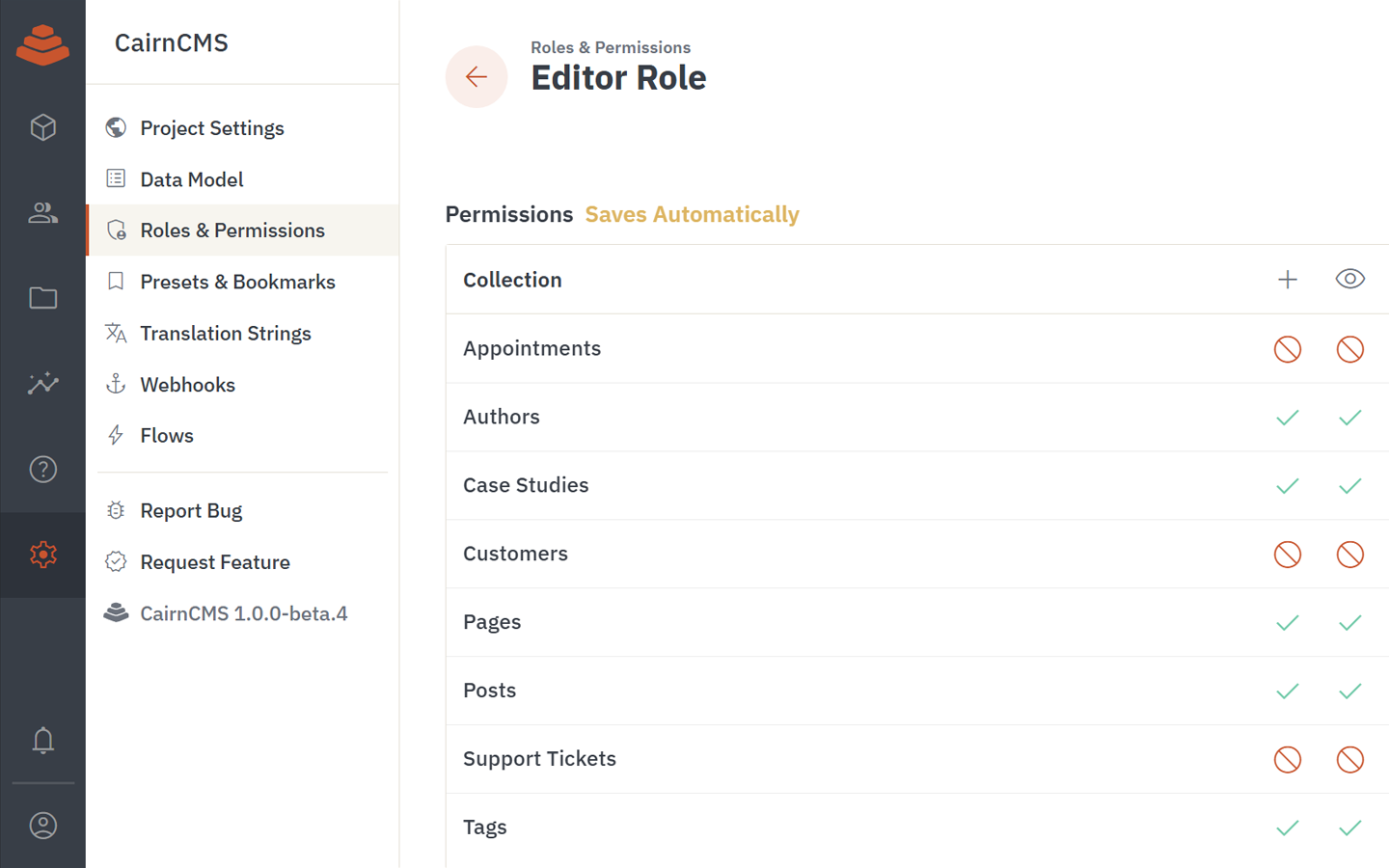
Automation without external tooling.
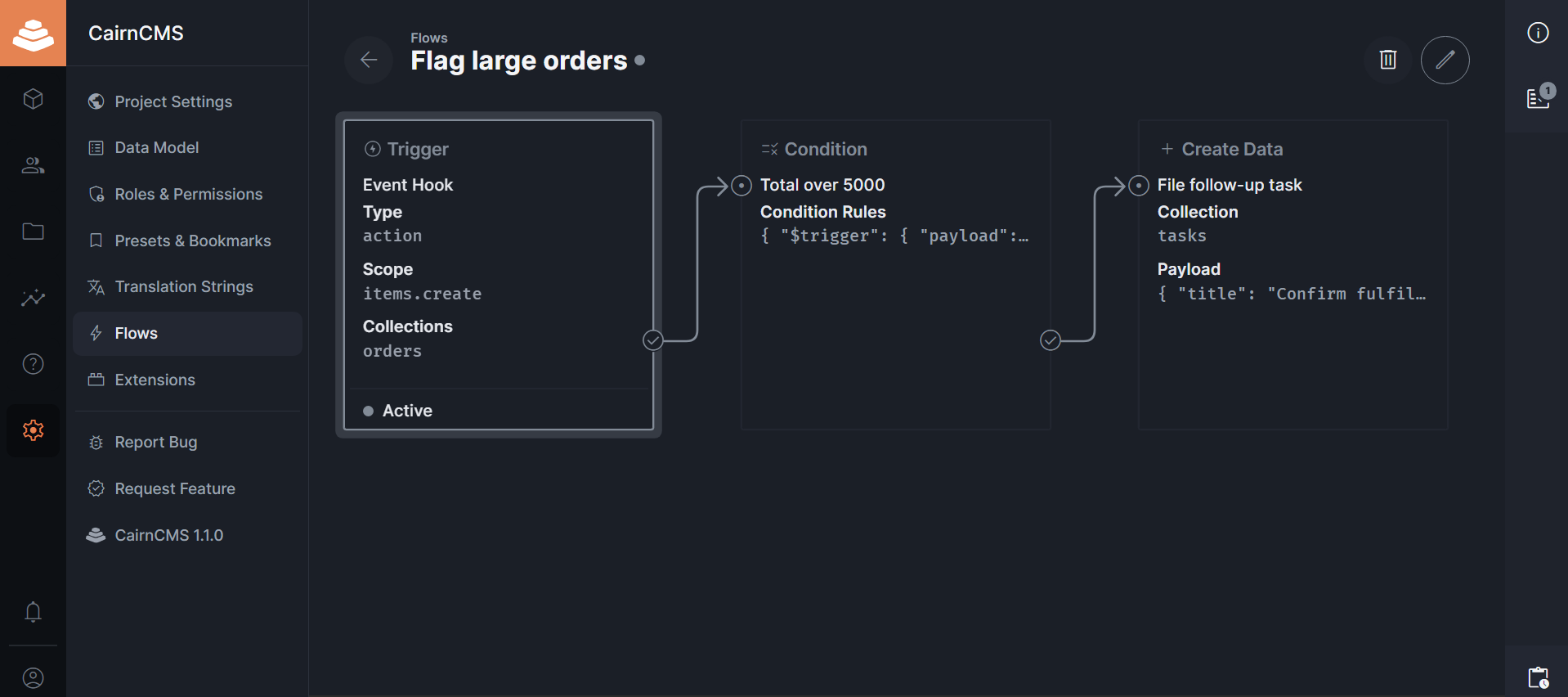
Build workflows directly inside CairnCMS. Trigger them from data events, incoming webhooks, cron schedules, or manual runs, then combine CRUD actions, conditional logic, email delivery, scripts, and external API calls. Each run is logged for inspection and debugging.
Build a flow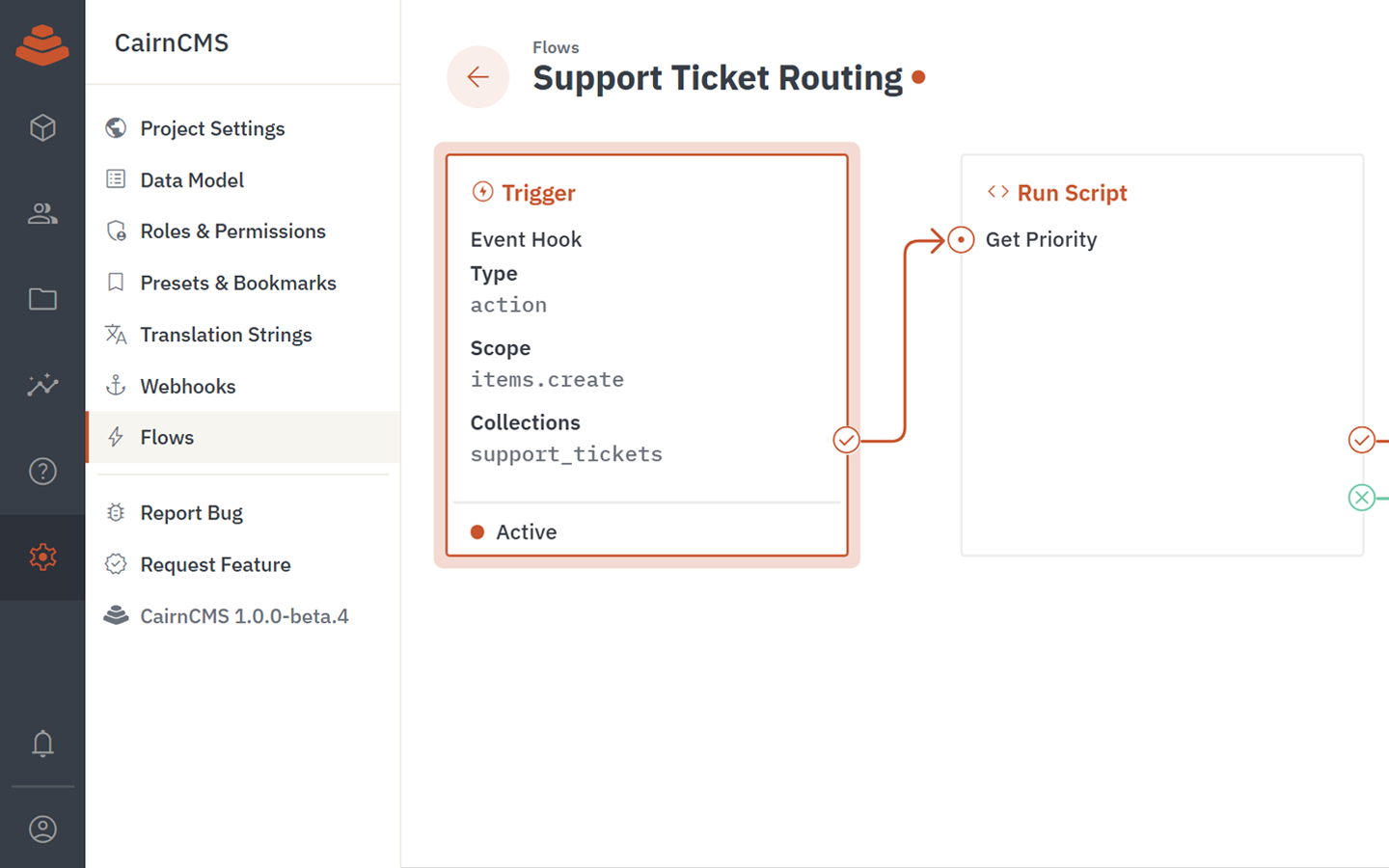
Real-time dashboards and insights.
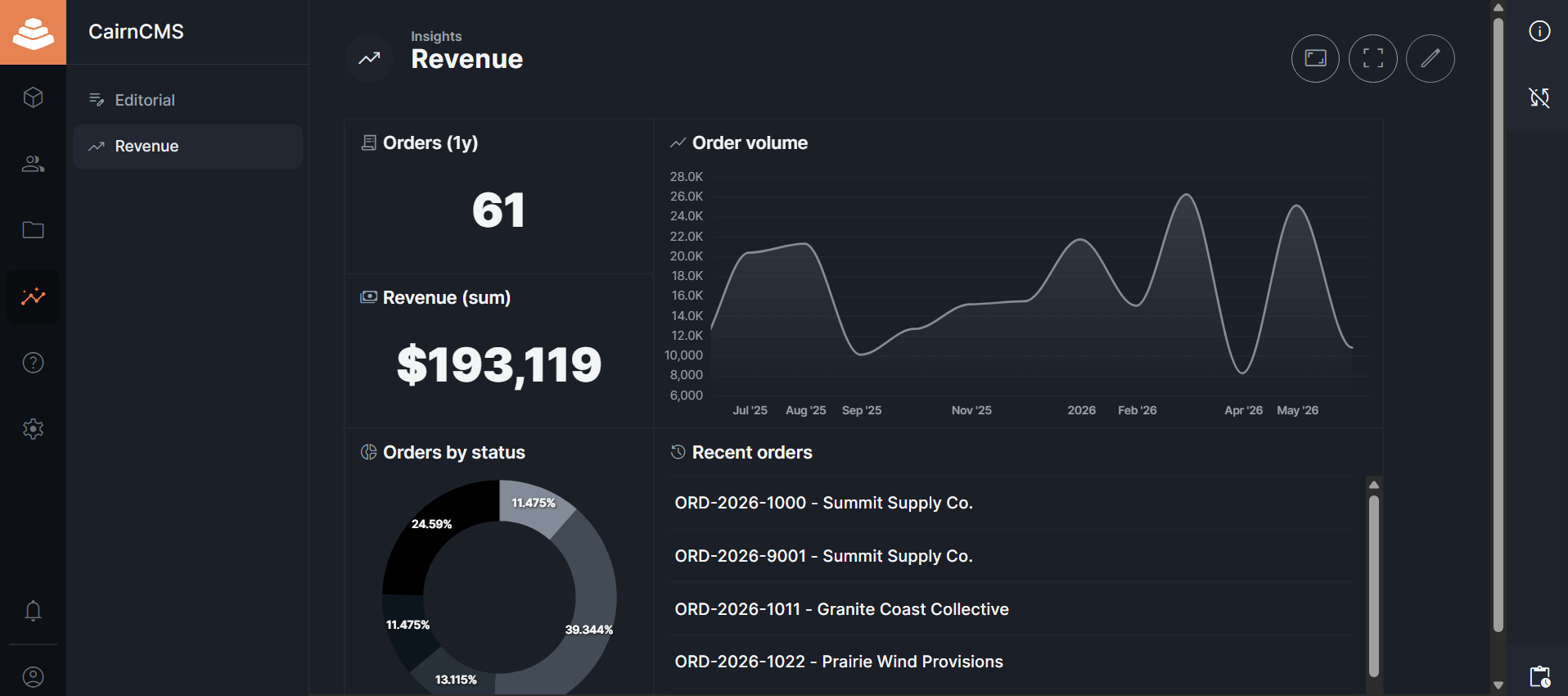
Build no-code dashboards inside CairnCMS with metrics, time-series charts, tables, and rich text panels. Work from live data already in the system and control access through the same roles and permissions used across the admin.
Build a dashboard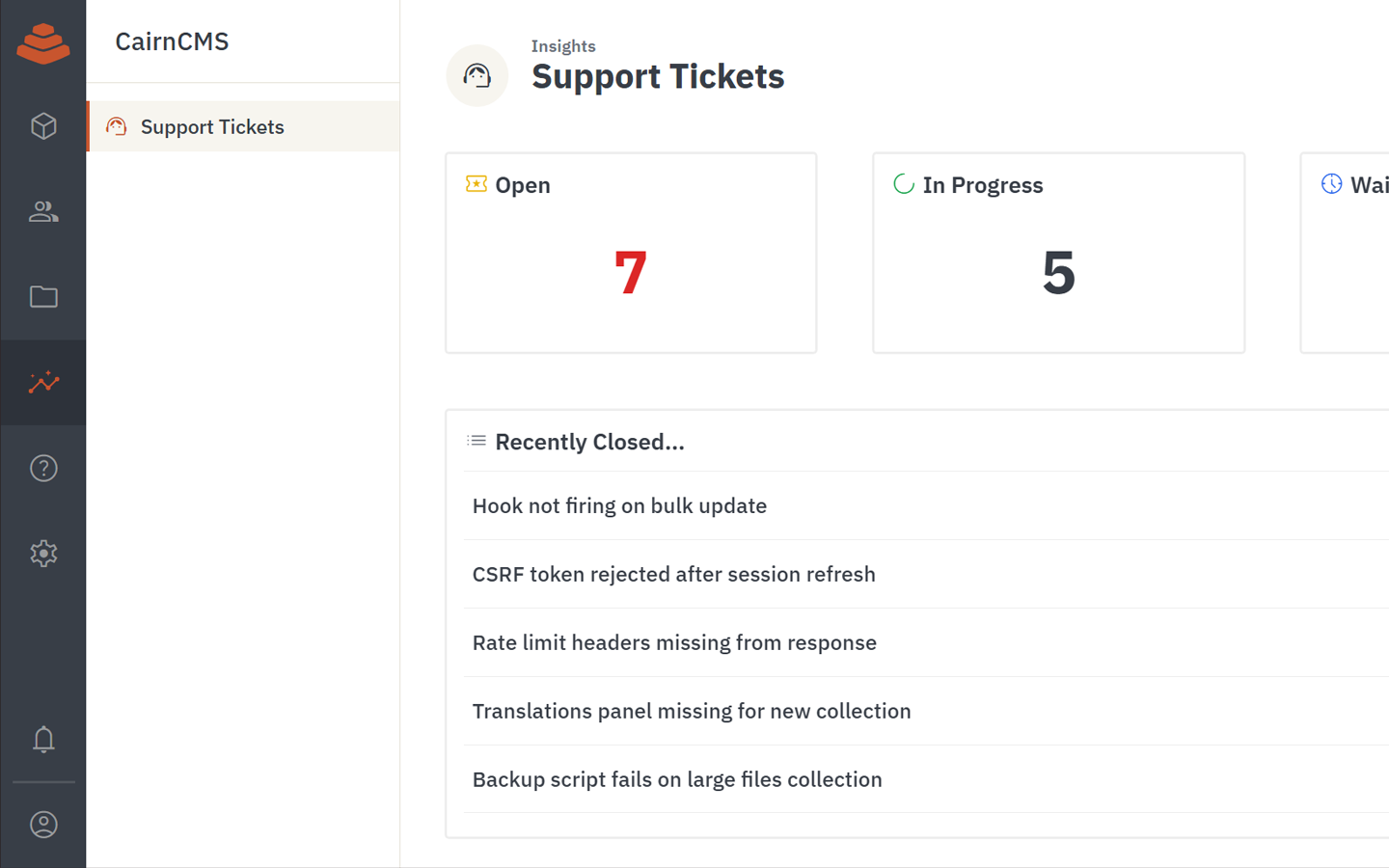
A file library that fits your storage.
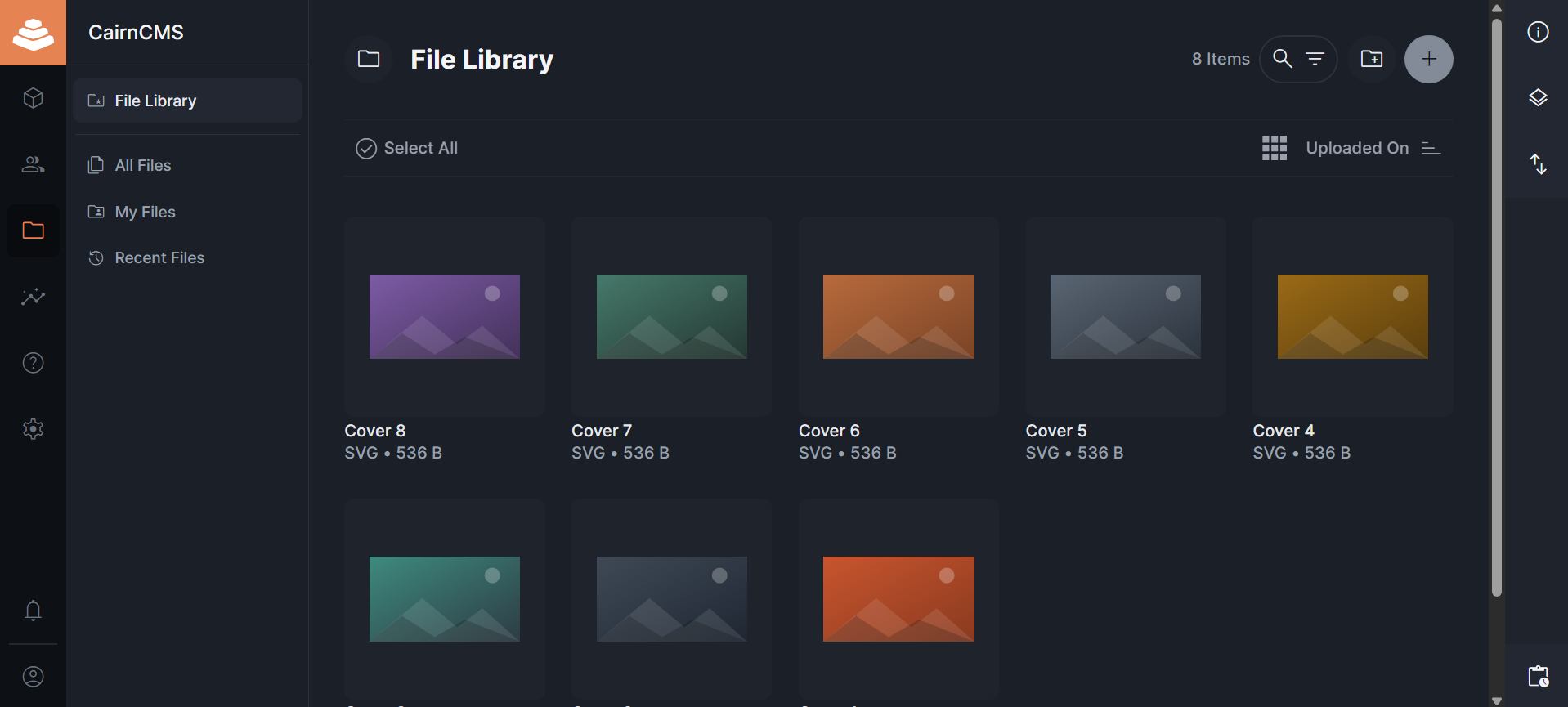
Manage images and other assets in a built-in file library with folders, metadata, and image transformations. Keep the same workflow whether files live on local disk, S3, Google Cloud Storage, Azure Blob, or Cloudinary, and switch storage backends through configuration instead of rewriting the app.
Manage files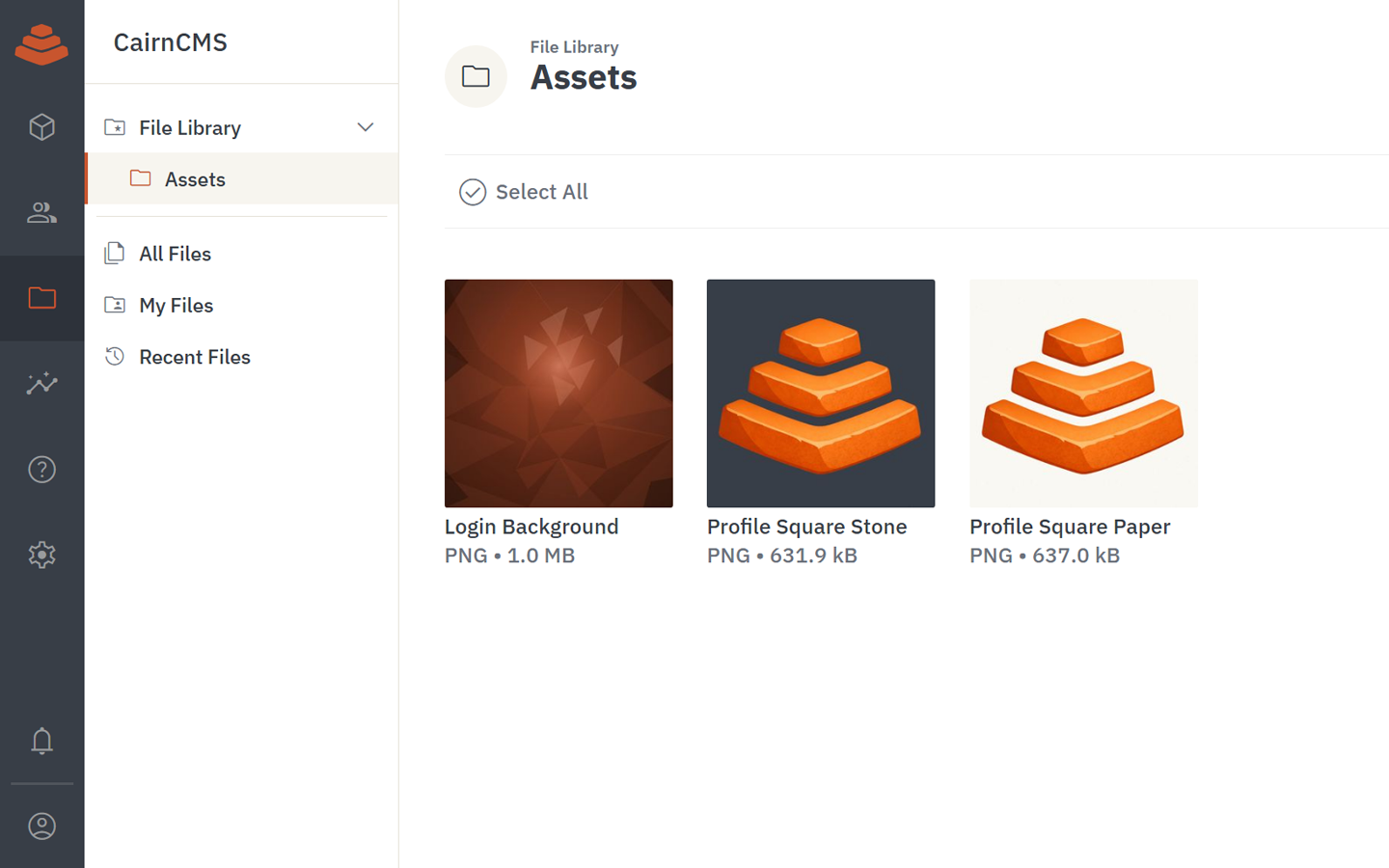
Launch Faster with CairnCMS
CairnCMS gives teams the APIs, webhooks, extensibility, identity integrations, and revision history that teams need alongside the core admin.
A Project Named for What it Aims to Be
A cairn /kɛrn/ marks a route with something durable that no single person owns, and that anyone can find. CairnCMS was named for that idea.
- 1 Join GitHub discussions to share ideas
- 2 Open issues for bugs or feature requests
- 3 Improve the docs to help others adopt
- 4 Contribute code once the approach is clear
Commitments to the CairnCMS Community
These are the principles that CairnCMS returns to when evaluating features, roadmap decisions, and governance choices.
Keep the core small, and extend at the edges.
Core features should solve common platform needs. Specialized needs belong in extensions, even when they matter to many users.
Govern transparently.
Document major decisions in public with rationale. Roadmap changes, deprecations, breaking changes, and project policy should be explained, not just announced.
Choose usefulness over novelty.
CairnCMS should prioritize features that solve recurring operational problems over features that merely look advanced.
Prefer depth over sprawl.
When choosing between surface area and improving what exists, CairnCMS should favor consistency, polish, and maintainability.
Respect the operator's environment.
CairnCMS should respect that users control their deployment, data, schema, and infrastructure. It should avoid unnecessary assumptions and fit into existing environments whenever practical.
Frequently Asked Questions
Common questions about CairnCMS.
Why was CairnCMS created?
CairnCMS started as a fork of Directus v10. It was created to preserve and enhance the earlier operator-first, database-first platform under a fully open-source GPLv3 license.
Is CairnCMS really a CMS?
CairnCMS is not a traditional CMS in that it isn't built around a fixed content model.
Instead, your SQL schema defines the model. CairnCMS then turns that model into a governed workspace with APIs, permissions, and workflows for managing structured content and operational data across many digital surfaces: websites, applications, dashboards, or internal tools, for example.
The "CMS" in CairnCMS reflects the modern role of content management, giving teams a governed workspace for the data and content their systems depend on.
What do you mean by "content and data infrastructure"?
CairnCMS is infrastructure in the application sense.
It does not replace your database, storage provider, or deployment platform. CairnCMS is an application layer on top of your SQL database and file storage backend. It adds the workspace, generated APIs, permissions, file management, dashboards, automation, and extension points needed to manage and govern the content and data your systems depend on.
Your database remains the source of truth. CairnCMS can read an existing schema or help you create a new one, but your application data stays in standard SQL tables you can inspect, query, back up, migrate, and use directly.
That is why CairnCMS is described as content and data infrastructure: it provides the operating layer around your data, while leaving you in control of the database, storage, and deployment model.
Why should I use CairnCMS instead of Directus?
Use CairnCMS if you want to use an operator-first platform under GPLv3 without the registration requirements, telemetry, or feature gates imposed by modern Directus.
It is especially well-suited to self-hosted teams that need full control over their infrastructure, multi-tenant architectures that depend on custom permissions, and organizations with privacy or compliance requirements that rule out mandatory analytics collection.
Can I use CairnCMS for production systems?
Yes. CairnCMS is intended for production self-hosted deployments, including larger and more complex systems, not just prototypes or demos.
Whether it is the right fit depends on your requirements, operating model, and comfort running the stack yourself, but the project is not positioned as a temporary or limited-use tool.
What databases does CairnCMS support?
CairnCMS actively supports SQLite, PostgreSQL, MySQL, and MariaDB. These are the databases the project is designed and tested around, including PostgreSQL 10 and MySQL 5.x coverage in the main-branch blackbox test matrix.
CockroachDB, Microsoft SQL Server, and Oracle support still exists in code inherited from Directus v10, but they are no longer part of the automated test matrix. If you depend on one of those vendors, treat that support as best-effort and plan to validate it yourself.
Will CairnCMS be compatible with future Directus releases?
CairnCMS is broadly compatible with Directus v10 at the API level. Its REST and GraphQL endpoints, authentication flow, permissions model, and admin behavior are based on the v10 platform, so frontends and integrations built against Directus v10 should require little or no change in most cases.
Projects using the JavaScript SDK will need a small migration, because CairnCMS ships its own SDK package and client factory instead of reusing the Directus package unchanged.
Compatibility with Directus v11 and later is not necessarily a project goal. CairnCMS will selectively adopt useful fixes and improvements, but it will not track upstream feature parity. Over time, the two projects will continue to diverge by design.
Will my Directus v10 data work with CairnCMS?
Yes. CairnCMS uses the same database structure as Directus v10, with one intentional change: the public role is migrated from `null` to a nil UUID sentinel to fix a long-standing constraint problem.
A migration handles that transition automatically, and existing collections, items, users, roles, permissions, and configuration should otherwise carry over as-is.
How can I contribute to CairnCMS?
The best way to support CairnCMS is to use it, file issues when you find bugs, contribute fixes when you can, and share the project with people who might benefit from it.
Contributions go through the standard GitHub pull request workflow with the Developer Certificate of Origin sign-off requirement. The contributing guide has details. The AI policy explains the project’s expectations around AI-assisted contributions.
For larger changes, file an issue first to discuss the approach before investing significant time in implementation.
Sponsors
CairnCMS is supported by organizations that share the project's commitment to long-term, open-source infrastructure.

